
Matthews, NC · Hidden leaks, high bills and damp walls
Water leak detection in Matthews, NC: is that bill spike a leak, and where?
A water bill that jumped, a damp spot on a wall or the sound of water when everything is off? Call (833) 571-0120 and tell us what you have noticed.
A leak is easy to confirm and hard to place. A simple meter check tells you whether water is going somewhere, and a plumber narrows down where.
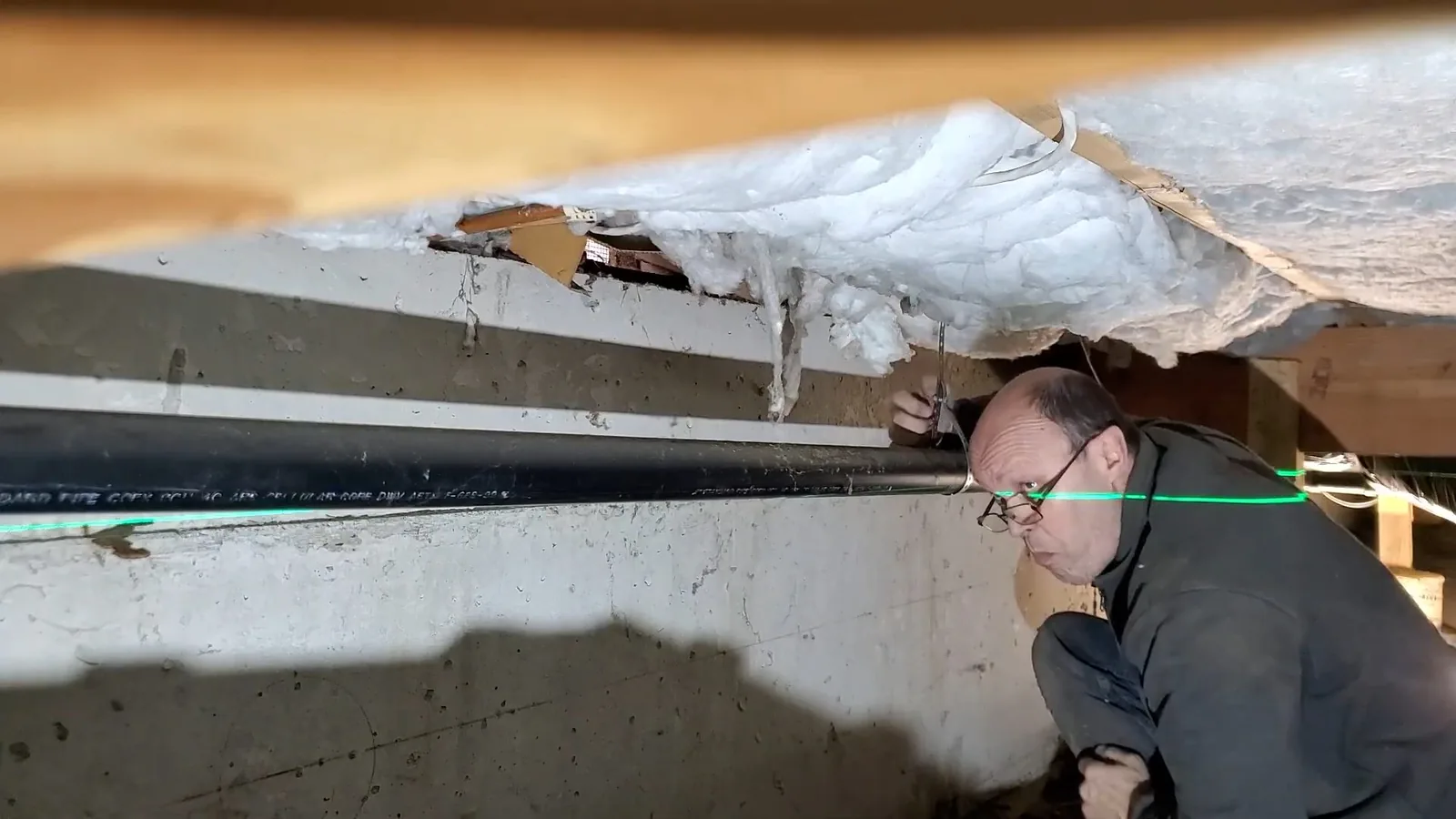
Read your meter before you call anyone
This test takes about half an hour. It does not find the leak, but it tells you whether you have one.
- Turn off every tap and appliance that uses water, including the ice maker and any irrigation.
- Find your meter and note the reading, or look at its flow indicator if it has one.
- Wait about half an hour without using any water.
- Read it again. If the number moved or the indicator is turning, water is going somewhere.
- Close your master valve and check again. If it stops, the leak is inside; if it keeps moving, it is between the meter and the valve.
If you are unsure how to read your meter, call and we will talk you through it. Do not open anything that is not meant for you to open.
Before the meter or after it: which side is the leak?
Charlotte Water says leaks inside a building or between the water meter and a building are for a plumber. For water leaking from a meter box, under the street pavement or from a fire hydrant, call 311 or 704-336-7600.
The city handles leaks on its side of the meter. Customers are responsible for repair and water use from leaks beyond the meter outlet.
A leak that has already burst a pipe is a burst pipe call. A leak you cannot find belongs here.
Signs you can see, hear and smell
- A water bill higher than your use explains, especially for two months running.
- A water meter that moves when everything is off.
- A damp or warm spot on a floor, a stain on a ceiling or a bubble in paint.
- A musty smell in a room that was not wet before.
- The sound of running water when no one is using any.
- A sudden drop in water pressure at several fixtures.
None of these proves a leak on its own. Together with a moving meter, they point to one.
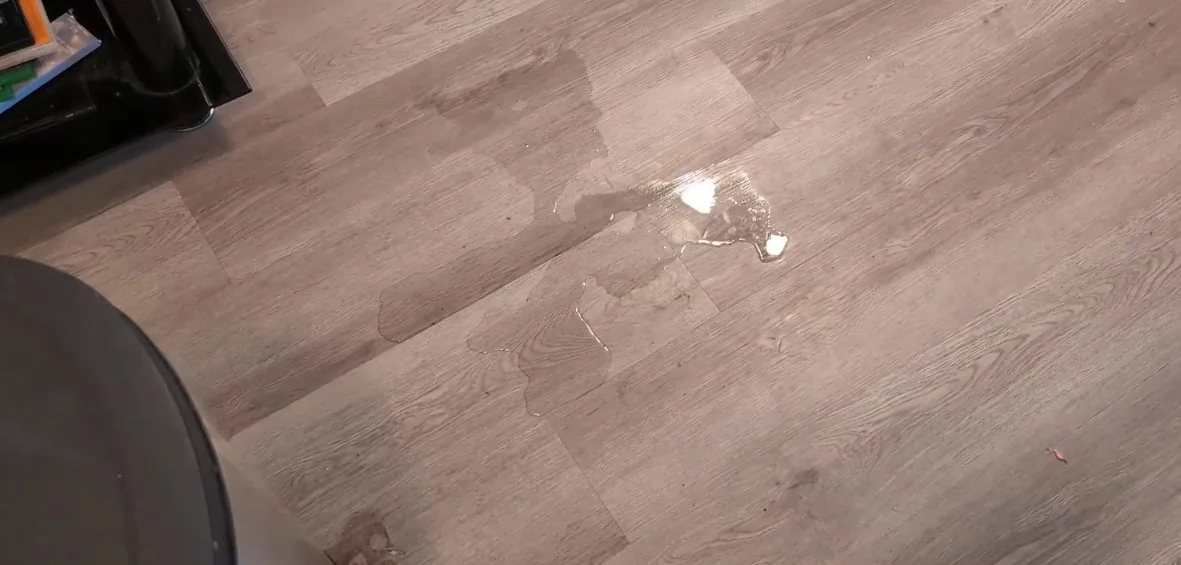
How leaks are found, and what each method cannot tell you
| Method | Good for | Limit |
|---|---|---|
| Meter test | Confirming that water is moving | Does not say where |
| Pressure test of a section | Isolating which part of the system leaks | Needs the lines to be shut off in sections |
| Acoustic listening | Pinpointing a pressurized leak by sound | Hard to hear in noisy or plastic lines |
| Thermal imaging | Showing warm or cold patterns on surfaces | Shows temperature, not water, so it needs confirmation |
| Moisture meter | Checking whether a surface is wet | Reads the surface and nearby material only |
Ask what was used, what it showed and how the plumber confirmed the leak before opening a wall. A good finding comes with at least two kinds of evidence.
Leaks that are not a plumber’s problem
- Gas: a gas smell means leave the house and call Piedmont Natural Gas at 800-752-7504 or 911.
- Roof or gutter: a stain under a roof valley after rain points to a roofer, not a plumber.
- Pools and spas: a pool that loses water is a job for a pool company.
- Irrigation: a leaking sprinkler line is yours. Charlotte Water’s adjustment does not cover irrigation or pool sewer charges.
Telling the plumber what you have ruled out saves time. If the meter test says the leak is on the house side, the plumber starts inside.
The bill: Charlotte Water’s private-side leak adjustment
Charlotte Water’s private side leak adjustment removes 50 percent of the excess water after a leak, and 50 percent of the excess sewer when the water returns to the sewer system. It uses a baseline of your six-month average from before the leak began.
You must show that the leak was fixed, with a plumber’s statement, a paid receipt or repair photos. Filling a pool, leaving a hose running or capping a leaking service instead of repairing it are excluded. A customer can receive two private leak adjustments in a rolling 12 months.
Keep the plumber’s written note and receipt for the adjustment. Call 311 to reach the Customer Care Team.
Meter moving and no idea why? Call and tell us what you saw.
Call (833) 571-0120Behind the wall, under the ceiling and in the basement
A stain on a ceiling usually sits below the source, because water travels along framing before it shows. Start with the room above: a bathroom, a laundry or a kitchen. A leak behind a wall often shows as bubbling paint, a soft baseboard or a warm patch on drywall.
In a basement, damp walls can come from groundwater or from a supply or drain line. Wipe the wall dry and check again in a day. If it returns with no rain, a pipe is a possible cause, and the meter test helps tell the two apart.
Pinhole leaks, yard lines and commercial buildings
A copper pipe can develop a pinhole that sprays a fine mist inside a wall. It often shows up as a stain or a patch of damp insulation. If several appear, the line may be at the end of its life, and replacing the supply lines becomes a decision.
A leak in the yard line between the meter and the house shows up as a wet patch, soft ground or an unexplained rise in the bill. In a business, a leak behind a restroom wall is a maintenance problem, and the same meter test applies.
Why a small leak is worth finding early
A slow leak costs money every day it runs and damages what it touches. A drip inside a wall soaks insulation and framing for weeks before a stain shows. A leak under a floor can lift flooring and feed mold.
Water that runs unseen is also a bill problem. Even a small continuous flow adds up over a billing period. Finding the leak early keeps the repair small and the damage minor.
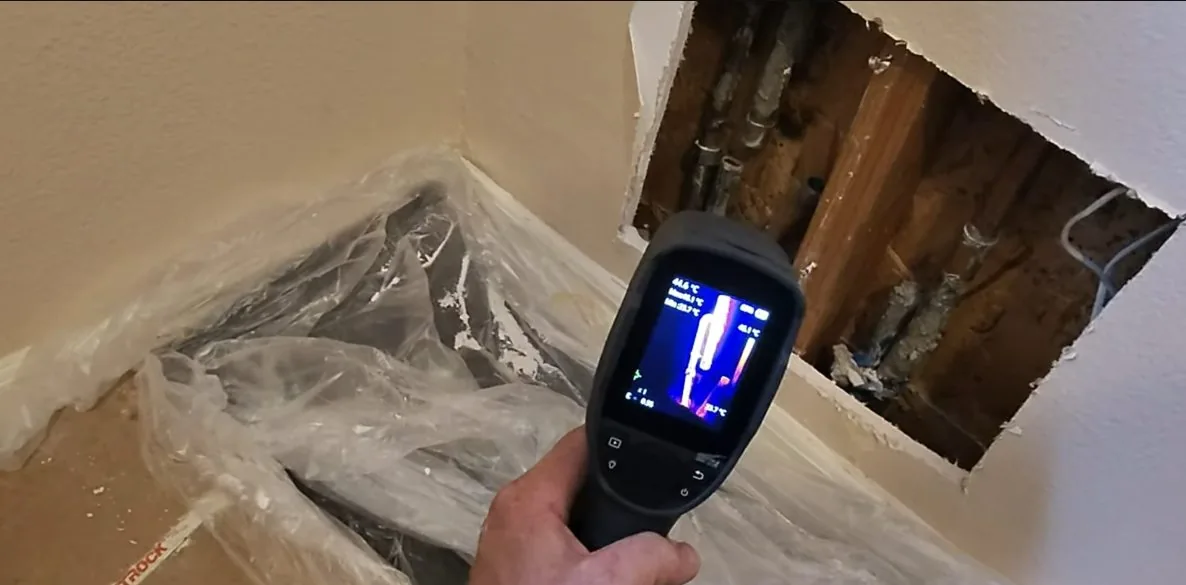
What to tell the plumber when you call
- What you noticed first: the bill, a stain, a sound or a smell.
- What the meter test showed, if you did it.
- Where the water heater, main valve and meter are.
- The age of the house and the type of pipe, if you know it.
- Whether any fixture has been replaced recently.
- Whether anyone has already opened a wall or floor.
These answers let the plumber arrive with the right equipment and start in the right part of the house. They also help rule out a fixture leak, which is a simpler repair.