
Matthews, NC · Replacing failing supply pipes throughout the house
Whole-house repiping in Matthews, NC: when patching stops making sense
Two pinhole leaks in a year, gray plastic pipe in the attic or water that has lost pressure? Call (833) 571-0120 and describe the pipe and the leaks. A repipe is a big job, and the first question is whether you need one.
Many leaks are a repair. A repipe makes sense when the pipe material or the leak history says the next failure is coming.
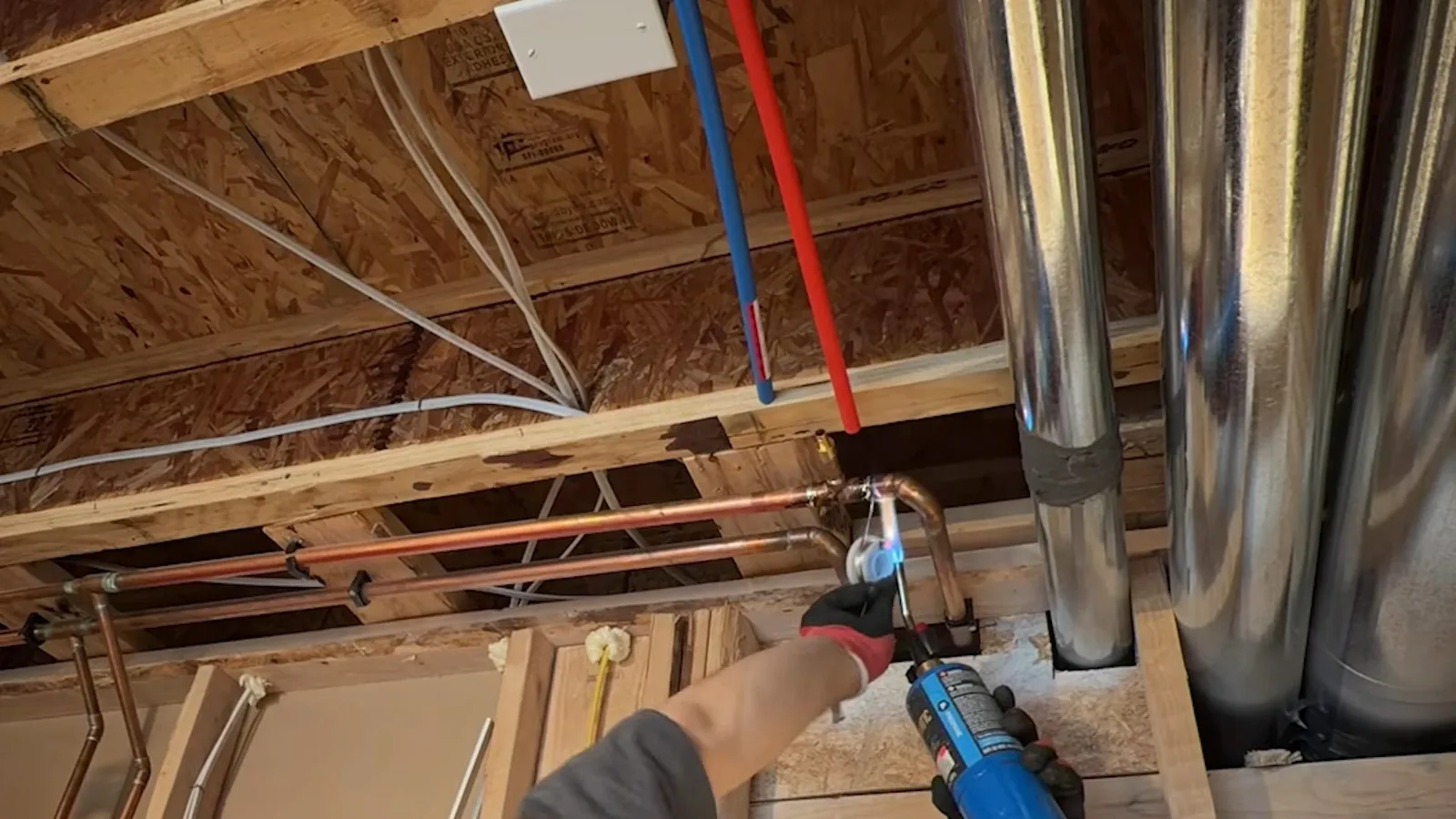
Repair a leak, or replace the pipes?
One leak in a pipe that is otherwise sound is a repair. Repeated leaks, a known problem material or pipes that no longer deliver water well point to replacement. The question is not the pipe’s age alone but how it fails.
| Situation | Repair is usually enough | Repipe is worth asking about |
|---|---|---|
| One leak at a joint or fitting | Yes | |
| Two or more leaks in a short time | Yes | |
| Gray polybutylene supply pipe | Yes | |
| Pinholes in copper at several places | Yes | |
| Weak flow at several fixtures | Check valves and fixtures first | If the pipes are the cause |
For a single leak, start with repairing a broken section of pipe. For a leak you cannot find, see locating a hidden leak.
Gray plastic pipe: what polybutylene is and how to check
WRAL reports that polybutylene pipe was installed in homes from about 1978 to 1995, and that the pipe makers settled a class-action suit in 1995. More than 15,000 North Carolina customers had homes replumbed through it. The story says the pipe is usually gray.
The settlement claim period closed long ago, so there is no current program to replace it. The practical question is simply whether your house has it.
- Look at the pipe where it enters the house, at the water heater and under sinks.
- Note the color and any printed markings.
- Photograph the pipe and its fittings.
- Ask a plumber to identify the material, and ask for it in writing if you are buying or selling.
- Ask whether the fittings are original or have been changed.
Why the age of Matthews homes matters
The UNC Charlotte Urban Institute housing assessment puts the median Matthews home at 1991, with 53 percent built between 1980 and 2000. That window overlaps the polybutylene years and the point at which copper starts to show age.
That is not a diagnosis of your house. It is a reason to know what is in your walls. Charlotte Water’s 2025 report lists soft water at 32 ppm, so hardness scale is not the usual cause of failure here. Your plumber should tell you what they see.
Choosing a pipe material
| Material | What to know | What to ask |
|---|---|---|
| Copper | Long track record, solid, harder to run through walls | Wall thickness and joint method |
| PEX | Flexible plastic that runs with fewer joints | Fitting type and warranty terms |
| CPVC | Rigid plastic, used in some jobs | Fitting method and temperature rating |
Ask which material the plumber recommends for your house and why. Ask what the manufacturer warranty covers and whether it needs a registered installer. A clear reason matters more than the material’s name.
What a repipe involves and how long water is off
- The plumber walks the house and maps the supply lines.
- Walls or ceilings are opened where access is needed.
- New lines are run to each fixture and tested under pressure.
- The old lines are abandoned or removed.
- Openings are closed and the water is restored.
Ask how long the water will be off and when. Ask who patches the walls and paints, because many plumbers leave that to others. Ask whether the work is done in phases or all at once, and where you can wash and use a toilet during the job.
Thinking about a repipe? Call and describe the pipe and the leaks.
Call (833) 571-0120Permits, licenses and the quote
Mecklenburg County Code Enforcement says permits are required for the installation, extension, alteration or general repair of plumbing systems. It says permits may not be required for smaller projects unless the work changes plumbing, so a repipe is not exempt on that basis. Ask your plumber which office issues the permit for your address and who files it.
North Carolina requires a plumbing license for work done for pay under G.S. 87-21. Ask for the license information and get the scope in writing, including the pipe material, the number of fixtures and who restores the walls.
Before and after: bills, insurance and records
If old pipes have been leaking, Charlotte Water’s private side leak adjustment may reduce an inflated bill once the leak is repaired. It asks for a plumber’s statement, receipt or photos.
Insurance may respond to damage from a sudden leak but often not to the worn pipe itself. See water damage after a pipe failure for the first steps after a leak. Keep photos of the old pipe and the invoice for your records.
Partial repipe or whole house?
Some houses need only one branch replaced, such as the line feeding a bathroom or the section under a floor. That can fix a known problem without opening every wall. A partial repipe makes sense when the other pipes test sound and are made of a material you trust.
A whole-house repipe makes more sense when the material is the problem, as with polybutylene, or when failures keep appearing in different places. Ask for both quotes, and ask what a partial job leaves behind.
Living in the house during a repipe
Plan for several days of noise, dust and interrupted water. Ask which rooms will be opened, what will be protected and when each fixture will be back in use. Move furniture away from walls and clear closets near fixtures.
Ask what happens to the hot water heater connections, the outdoor faucets and any appliances such as the ice maker and washing machine. Make sure the plan lists every fixture so none is missed.
Questions to ask before you sign
- What material is being installed, and why this one?
- What is the warranty on the pipe and on the labor?
- Who patches and paints the walls?
- Who pulls the permit, and what does the inspection involve?
- How many days will the water be off?
- What happens if the crew finds damage inside the walls?
A written scope answers most of these. Compare quotes line by line and not by the total.