
Matthews, NC · Tank water heaters, gas and electric
Water heater repair in Matthews, NC: when a part fixes it and when the tank is done
No hot water, lukewarm water or a puddle under the tank? Call (833) 571-0120 and say whether the unit is gas or electric. That one fact narrows the problem quickly.
Most calls come down to one decision: replace a failed part, or stop spending money on a tank that is near the end. This page helps you make it.
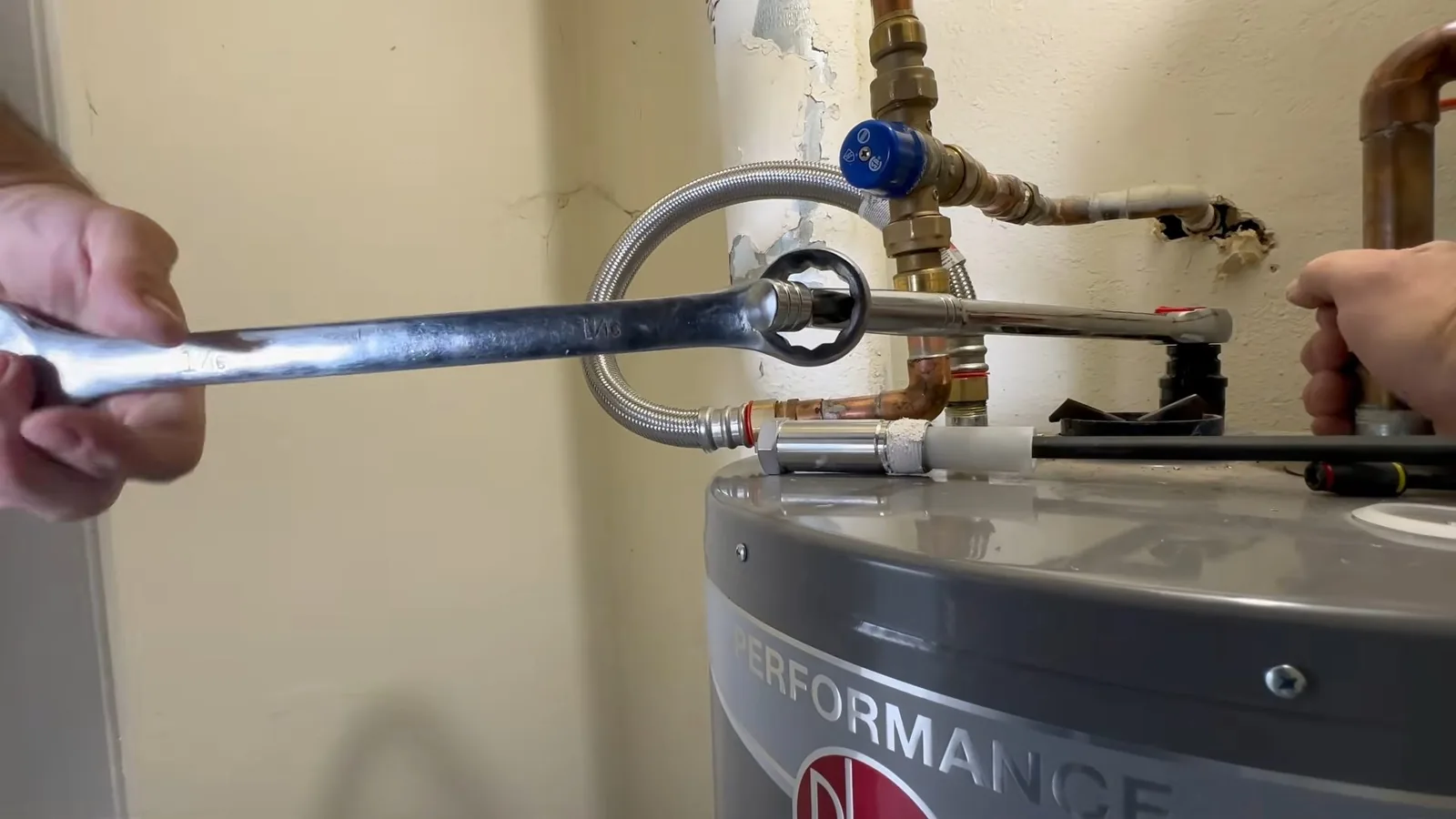
Five minutes of safe checks before you call
These checks cost nothing and sometimes solve it. They also tell the plumber what to bring.
- Look under and around the tank. Note whether water is coming from the tank body, the pipes on top or the relief valve pipe.
- Electric unit: check that the breaker has not tripped and the switch is on.
- Check the thermostat setting. The U.S. Department of Energy recommends 120 degrees.
- Gas unit: look at whether the burner is lit through the viewing window, if your unit has one. Do not hold a flame to anything.
- Smell gas? Leave the house and call Piedmont Natural Gas at 800-752-7504 or 911. A gas smell is not a plumbing call.
What these checks cannot tell you is why a part failed. A tripped breaker can be a one-off or the sign of a failing element.
Gas or electric: what each failure looks like
The unit type decides which parts fail and what a repair involves.
| Symptom | Gas tank | Electric tank |
|---|---|---|
| No hot water at all | Pilot or burner will not stay lit, or the gas control has failed | Tripped breaker, failed heating element or a failed thermostat |
| Lukewarm water | Burner running poorly or a partly failed thermostat | One of two heating elements has failed |
| Rumbling or popping | Sediment on the tank bottom | Sediment on the tank bottom |
| Water at the base | A leaking fitting, the relief valve or the tank | A leaking fitting, the relief valve or the tank |
A plumber confirms the cause with tests before replacing anything. Ask what was tested and what the reading was.
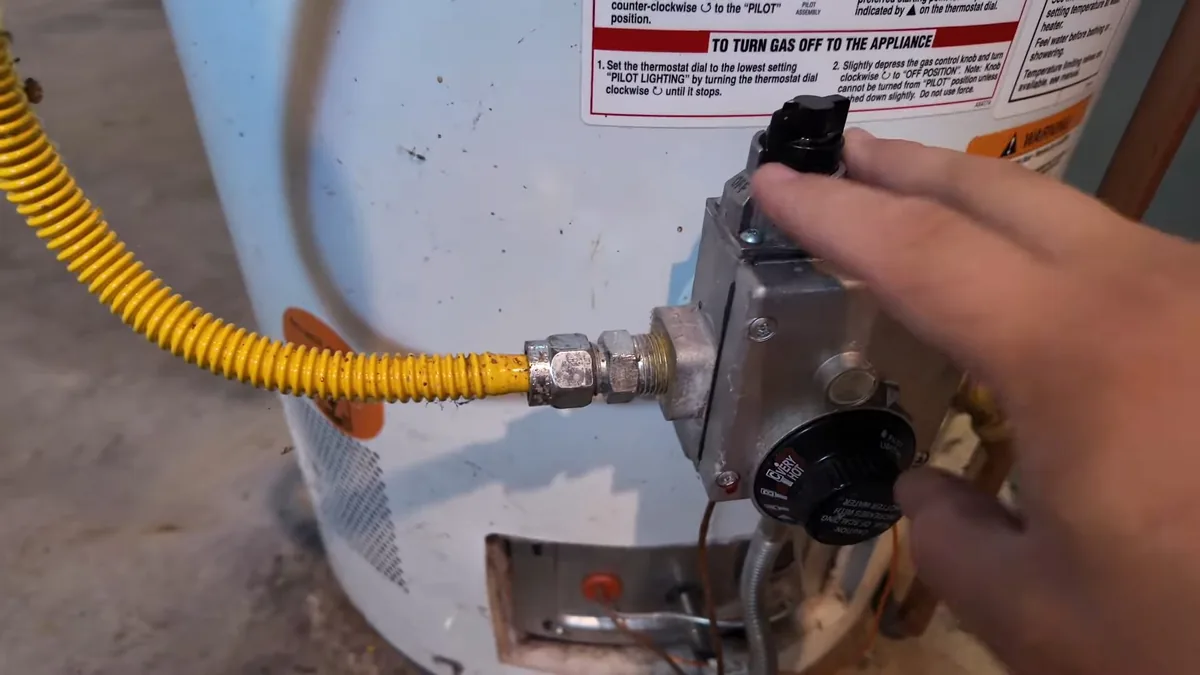
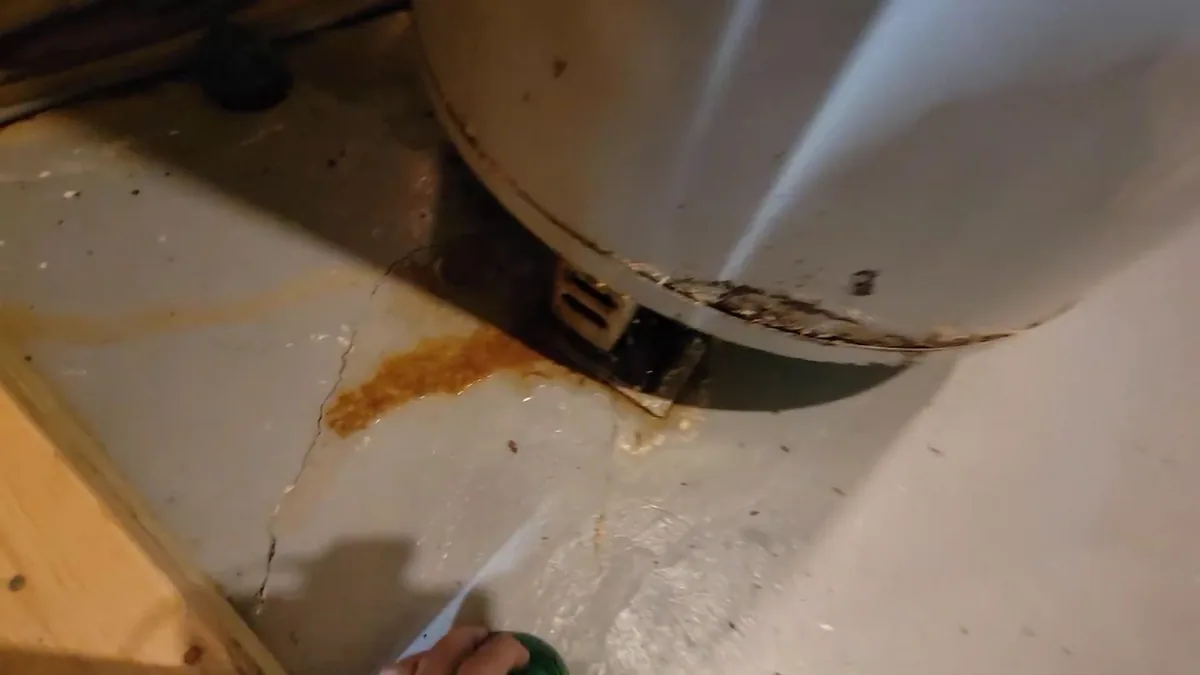
Is the leak from a fitting or from the tank?
This is the question that decides everything. A leak at a fitting, a drain valve or the relief valve is usually a repair. Water seeping out of the tank body is not.
A tank that leaks has failed inside, and no part fixes it. Shut off the water to the heater, turn off power or gas, and plan for replacement.
If the unit is leaking and the floor is wet, water damage cleanup limits what the water takes with it. Replacement is covered on the water heater installation and replacement page.
Repair or replace: the 10 to 15 year line
The Department of Energy says a storage tank water heater lasts 10 to 15 years. The age is printed on the data plate on the tank. The serial number usually encodes the manufacture date, and the plumber can read it.
A rule of thumb that helps: a repair on a unit in its first decade is usually worth it. Past 10 years, each repair buys less time.
- Under 10 years and a single failed part: repair.
- Past 10 years and a leaking tank: replace.
- Past 12 years with repeated repairs: price a replacement before the next repair.
- Rumbling that returns right after a flush: ask about replacement.
Charlotte Water’s tap water tests soft, at an average of 32 ppm total hardness in its 2025 report. If scale is the only reason a salesperson gives for a new unit, ask to see what failed.
A dripping relief valve is a warning, not a nuisance
The temperature and pressure relief valve sits on the side or top of the tank, with a pipe that runs down toward the floor. Water at the end of that pipe means the valve opened.
A valve that opens once can be reacting to a real pressure or temperature problem. A valve that drips constantly may be worn. Either way, never cap or plug the discharge pipe. The valve is the safety device.
- Note whether the dripping stops when hot water is not in use.
- Check that the thermostat is at the recommended setting.
- Call the plumber and say the relief valve is discharging.
- Keep clear of the area if the water coming out is very hot.
Rumbling, popping and sediment
Noise from a tank usually means sediment has collected on the bottom, and water trapped under it is boiling. It is a sign of age and use, and the noise often returns soon after a flush.
A flush can extend life on a younger unit. On a unit well into its second decade, it can disturb sediment that was sealing a weak spot. Ask the plumber which applies to yours.
Is it the heater, or is it the faucet?
Hot water that is missing at only one tap is rarely a heater problem. A failed cartridge, a blocked aerator or a mixing valve in a shower can cause it.
Run hot water at two other taps. If those are hot, the heater is fine and the fixture is the problem, which is a job for faucet and sink repair. If every tap is cold, the heater or its supply is the problem.
Not sure which one you have? Describe what you see and we will tell you where to start.
Call (833) 571-0120Who may work on a water heater in North Carolina
North Carolina treats installing or replacing a water heater as plumbing work that needs a plumbing license, with one exception: a homeowner doing it personally on a property that is not for sale or rent, under G.S. 87-21 as summarized by the North Carolina Department of Administration.
Minor repairs have a narrower exemption, and it does not extend to changing the energy source or the routing or sizing of piping or venting. Ask whoever you hire whether they hold a North Carolina plumbing license and whether the job needs a permit.
Ask for the date, the work done and the parts replaced in writing. A repair that is recorded can be compared with the next quote, and it shows whether the same part keeps failing. If the same part fails twice, that is a reason to ask about replacing the heater.