
Matthews, NC · Gas, electric and hybrid tank units
Water heater installation in Matthews, NC: choosing and replacing a tank unit
Your heater has failed and the house has no hot water? Call (833) 571-0120 and say whether the old unit is gas or electric, how big it is and where it sits. That is enough to start planning.
A new unit is also a chance to choose well. The choice between gas, electric and a hybrid heat pump is made once and lasts about a decade or more.
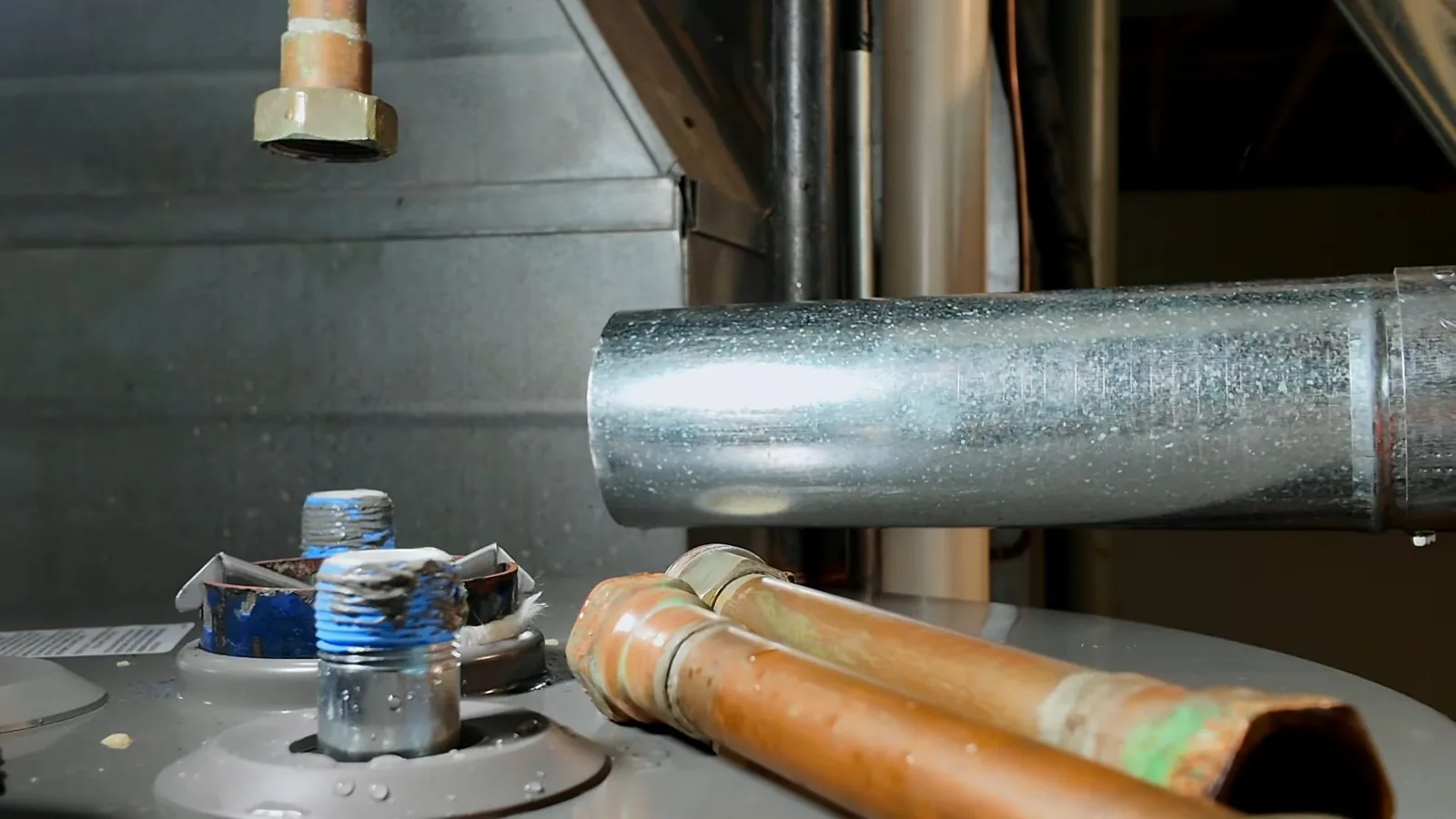
The heater has failed: what to do tonight
- If water is leaking from the tank, close the cold supply valve above it.
- Turn off power at the breaker for an electric unit, or turn the gas control to off for a gas unit.
- Smell gas? Leave the house and call Piedmont Natural Gas at 800-752-7504 or 911.
- Place a pan or towels under the tank to catch water and photograph the damage.
- Call and tell us the fuel type, the tank size on the label and where the heater sits.
If the unit is not leaking and only lukewarm, a part may have failed, so read about fixing a tank heater that still holds water first. If water has reached the floor, see cleanup after a heater leak.
Gas, electric or hybrid heat pump: how to choose
The U.S. Department of Energy says a storage tank water heater lasts 10 to 15 years. A heat pump water heater can be 2 to 3 times more energy efficient than a conventional electric resistance one. It needs a location that stays between 40 and 90 degrees Fahrenheit all year. It also needs at least 1,000 cubic feet of air space around it.
| Type | What it needs | What to ask |
|---|---|---|
| Gas tank | A gas supply, a vent to the outdoors and a safe discharge pipe for the relief valve | Is the vent still correct for the new unit? |
| Electric tank | A dedicated circuit with the right capacity | Can the panel carry it? |
| Hybrid heat pump | Space, air and the right temperature range, plus a drain for condensate | Does the garage or utility room meet the DOE conditions? |
Changing from one energy source to another is more than a swap. It changes the venting, the gas line or the electrical load, and it is the reason a like-for-like change is the simplest path.
Who may install it, and what to ask them
North Carolina requires a plumbing license to install or replace a water heater for pay. G.S. 87-21 carves out an exception for an owner doing the work on their own property.
Ask the installer whether they hold a North Carolina plumbing license, whether the job needs a permit and who files it. Ask for the manufacturer’s warranty terms in writing.
Ready to talk through replacement? Call and describe the old unit.
Call (833) 571-0120What a proper installation includes
- A shutoff valve on the cold supply so the unit can be isolated later.
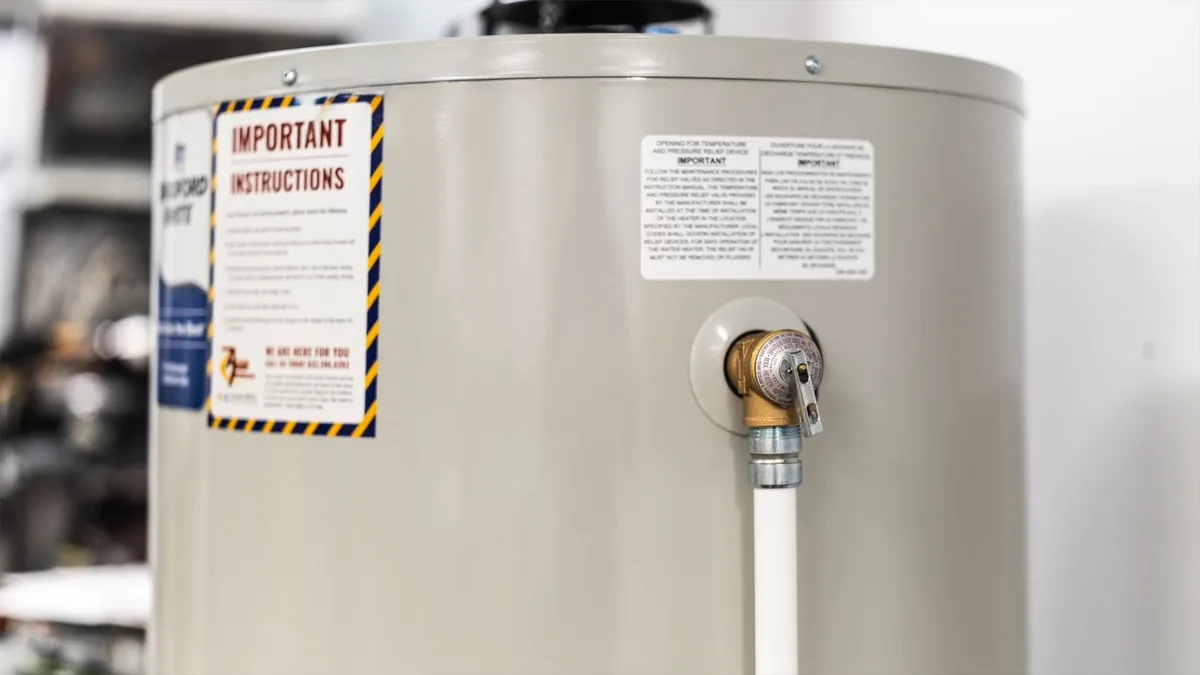
- A relief valve with a discharge pipe routed to a safe place and never capped.
- A drain pan and a drain where the heater sits above living space.
- Correct venting and combustion air for a gas unit.
- A question answered about thermal expansion: whether the system needs a way to handle the pressure that heating water creates.
- Removal and disposal of the old unit.
- A final check of the thermostat, set to the recommended 120 degrees.
Matthews water: soft, so skip the scale pitch
Charlotte Water’s 2025 water quality report lists average total hardness of 32 ppm, roughly 2 grains per gallon. That is soft. If a salesperson says hard water scale is the reason to buy a premium unit or a softener, ask what the water test showed.
This is Charlotte Water’s figure. If your water comes from another utility, ask that utility for its hardness number.
Gas units, hybrid units and the expansion tank
A gas heater needs a vent that suits the new unit and a gas supply sized for it. A hybrid heat pump unit needs air space and a drain for condensate. Many systems also need a thermal expansion tank, which absorbs the pressure that heating water creates in a closed system.
Ask the installer whether your system is closed, for example because of a pressure-reducing valve or a backflow device at the meter, and whether an expansion tank is part of the quote.
Tank water heater sizing: household size, baths and tubs
A tank sized for the household uses less energy than one that is too large and works better than one that is too small. Tell the plumber how many people live in the home, how many bathrooms you have and whether anyone fills a large tub.
If a tankless unit is on your list, tankless water heater services covers what that switch requires. The plumber should confirm where the old unit sits and whether it can be reached for service later.
Replacing old shutoffs, connectors and the drain pan
A replacement is the best moment to fix what the old installation got wrong. Corroded shutoff valves, brittle supply connectors and a missing drain pan are easy to replace while the tank is out.
Ask the installer to look at the vent on a gas unit, the electrical connection on an electric unit and the condition of the pipes that connect to the tank. Ask them to remove and dispose of the old tank. A unit that has leaked should be checked for water in the surrounding floor or wall.
- New flexible connectors or properly fitted piping.
- A shutoff valve you can reach in an emergency.
- A pan and drain if the heater sits above finished space.
- A visible, correct discharge pipe on the relief valve.
Ask for these items on the written quote. If a line is missing, ask whether it is included or left out, because a low quote sometimes leaves out the parts that make an installation last.
After the install: the first week
Run hot water at each fixture and check for leaks at every connection. Check the thermostat setting and the pilot or ignition if the unit is gas. Listen for unusual sounds and watch for water around the base over the next few days.
Keep the manual, the warranty and the installer’s name together. Note the installation date on the tank or in your home records, since heater age is the first thing anyone asks about later.