
Matthews, NC · Tankless installation, repair and flushing
Tankless water heater services in Matthews, NC: is the switch right for your house?
Running out of hot water in the middle of a shower, or thinking of replacing a tank with a tankless unit? Call (833) 571-0120 and tell us how many people live in the house.
Tankless units suit some homes very well and need real changes in others. Gas line size, venting and the electrical panel decide it more than the brand does.
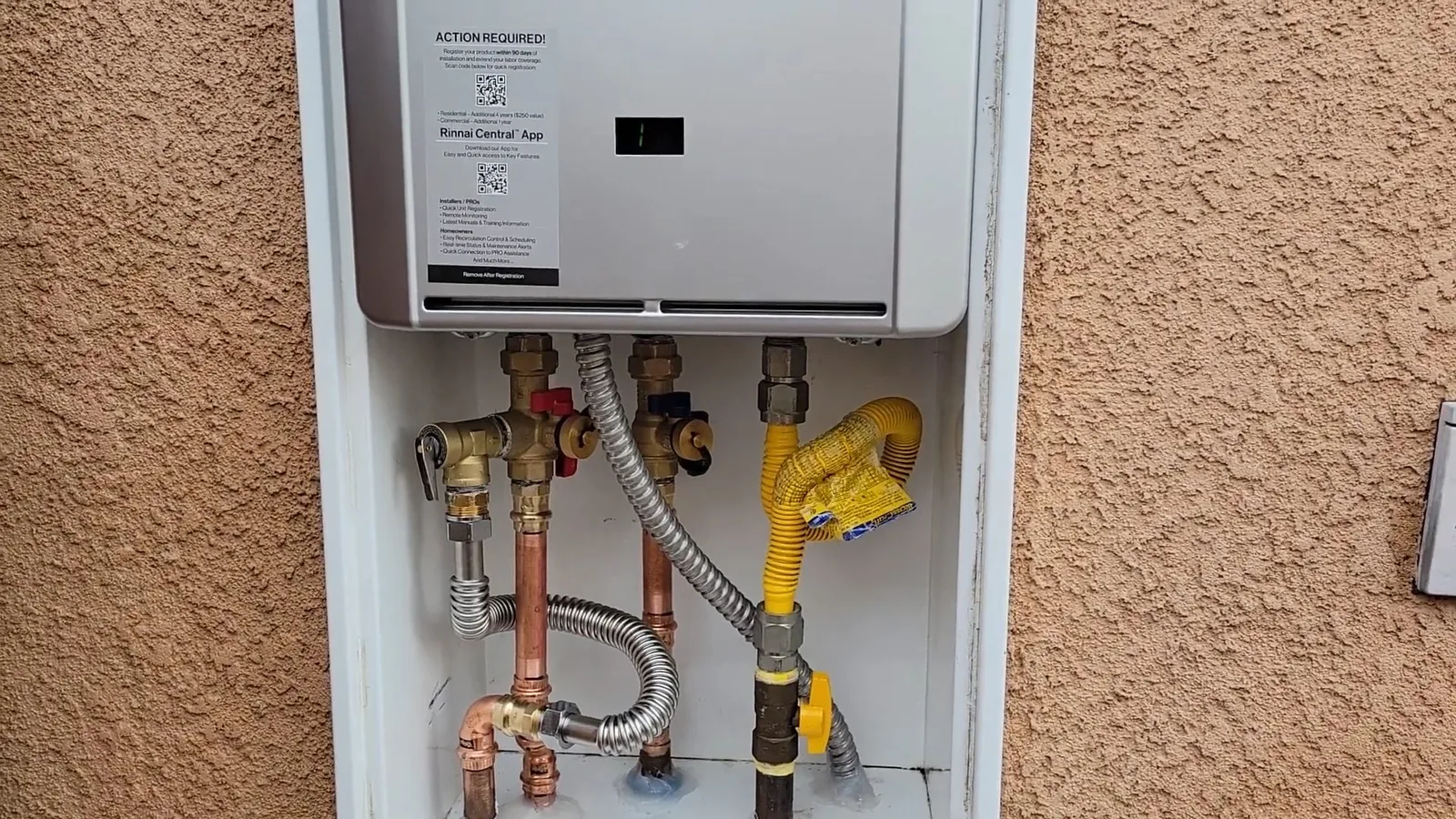
Does a tankless unit fit the way you use hot water?
The U.S. Department of Energy says tankless water heaters are 8 to 34 percent more efficient than storage tanks, with a higher upfront cost and lower operating costs. It also says their output is limited to about 2 to 5 gallons per minute, so a busy household may need more than one unit.
That flow limit is the real question. A shower, a dishwasher and a washer running together can ask for more hot water than one unit can give. Count what runs at the same time on a typical morning.
- Few people and spread-out use: a tankless unit is likely to work well.
- Several showers at once: ask how the unit is sized for that peak.
- A very large tub or a car wash bay: a tankless unit may not be enough.
What your house needs before a tankless unit goes in
The DOE guide to switching to a tankless unit says a gas unit may need a larger gas line, about three-quarters of an inch inside the house. Vents must be listed for the unit and run to the outdoors. In an older home with a half-inch main supply line, the supply may need upsizing.
Ask the installer to check each item before quoting.
- The gas line: size, length and capacity for the new unit.
- The vent route and where it ends outside.
- The electrical supply: an outlet for a gas unit, a much larger circuit for an electric unit.
- The water supply line size feeding the unit.
- Where the unit will hang and whether it can be reached for service.
Want to know whether your house is ready? Call and describe the heater, the gas line and the panel.
Call (833) 571-0120Gas or electric tankless: the differences that matter
| Type | What it needs | What to watch |
|---|---|---|
| Gas tankless | A larger gas line in many retrofits, a listed vent and an outlet | Venting and gas line size drive the work |
| Electric tankless | 208 or 240 volts and often 50 to 200 amps, per the DOE guide | The panel may need an upgrade |
The DOE guide says electric units need much higher power than gas units. Check the panel before you choose.
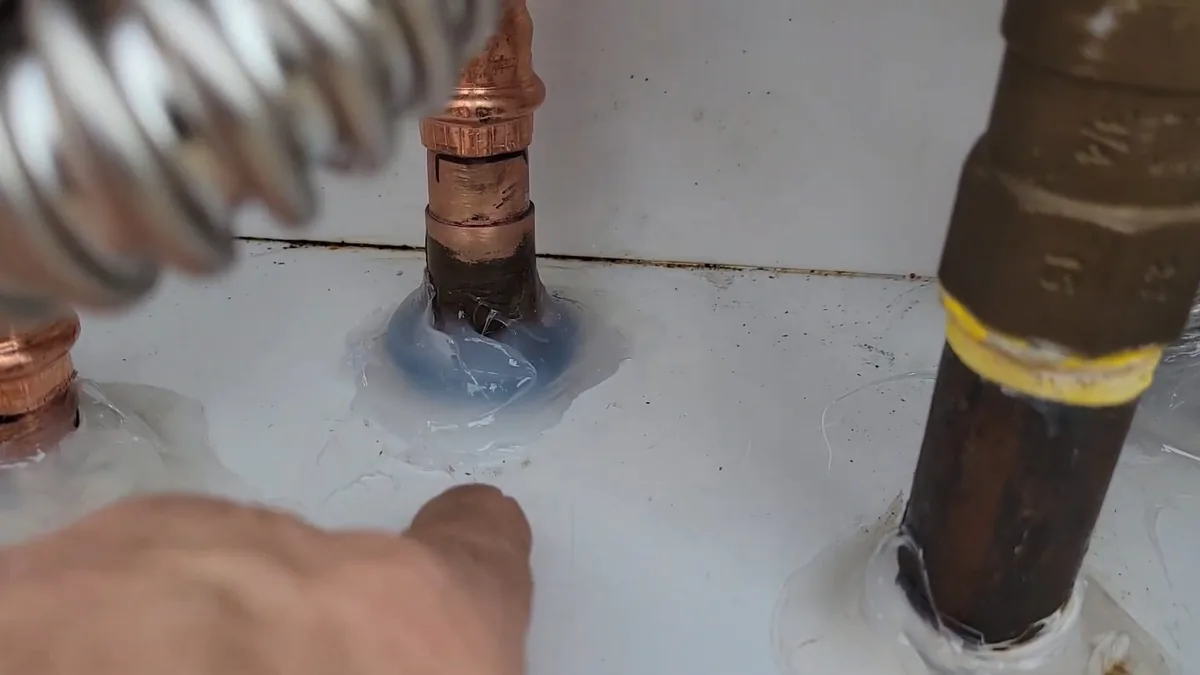
Small flows, power outages and the cold-water sandwich
Each unit has a minimum flow that turns it on, which the DOE guide gives as roughly 0.4 to 0.9 gallons per minute. A faucet trickle may not start it. You may need to open the tap wider.
The guide also describes a brief drop in temperature that can happen with frequent on and off use. It says this cannot be completely removed. A tankless unit also stops when the power goes out, because the controls need electricity, even on a gas unit.
Flushing and maintenance in Matthews
The DOE guide says tankless units should be flushed according to the manufacturer’s instructions to prevent calcium buildup, on the manufacturer’s schedule. It says some manufacturers require a water softener when hardness is high, roughly above 8 to 14 grains per gallon.
Charlotte Water’s 2025 report puts hardness at about 2 grains per gallon, so scale is a smaller concern for Charlotte Water customers. Follow the manufacturer’s schedule for warranty reasons and ask the installer what it is.
Repair a tankless unit or replace it?
The DOE says tankless units last about 20 years. A unit in its first decade with one failed part is usually worth repairing. Past that, weigh the repair against the unit’s age and its error history. If the unit is a tank, see tank water heater repair instead.
Small under-sink and point-of-use electric units serve a single sink. Check the circuit and the flow before you choose one, because a unit that is too small gives weak hot water.
North Carolina requires a plumbing license to install or replace a water heater for pay, with an owner exception under G.S. 87-21. Ask your plumber whether a permit applies.
Keep the paperwork that came with the unit. Warranty terms differ by manufacturer and often depend on the model number, the serial number and who installed it, so a receipt and a photo of the data plate can matter when a part fails. Ask the plumber to write the model number on the invoice, along with the venting material and the gas line size used. Those details help the next person who services the unit.
Questions to ask before you buy a tankless unit
- How many gallons per minute will this unit deliver at the temperature rise our cold water needs?
- Does the gas line or the electrical panel need work, and what does that add?
- Where will the vent run and end?
- What is the flushing schedule, and who does it?
- What does the warranty require of me?
- What happens to hot water if two showers run at once?
Honest answers to these decide whether the switch pays off. A quote that does not mention the gas line, the vent or the panel is incomplete.
Ask for the answers in writing, and ask the installer to walk the house with you before the quote is final. A walk-through of the heater location, the gas meter and the panel takes a few minutes and prevents surprises on installation day.
A tank or a tankless unit: a short comparison
| Question | Storage tank | Tankless |
|---|---|---|
| Typical life, per the DOE | 10 to 15 years | About 20 years |
| Hot water supply | Limited by tank size, then recovery time | Continuous, limited by flow rate |
| Upfront work | Usually a like-for-like swap | May need gas, vent, supply or panel changes |
| Space | Needs floor space | Mounts on a wall |
If the house is set up for a tank and the household is small, a new tank is often the simpler choice. See water heater installation for that route.